
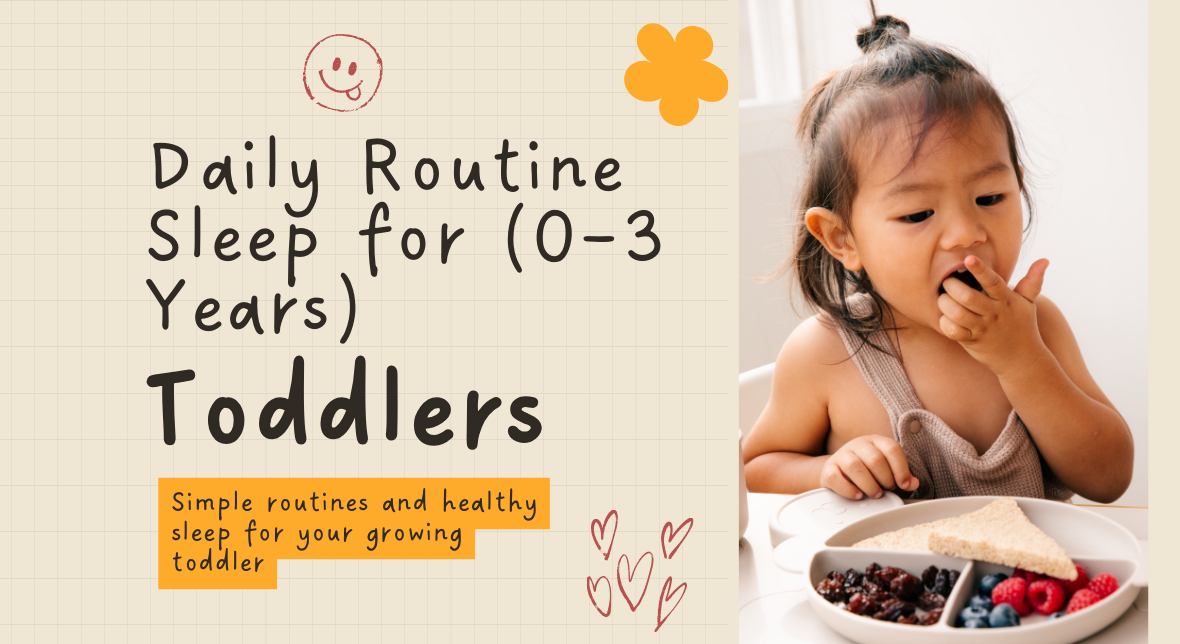

Daily Routine & Sleep for Toddlers (0–3 Years)
The early years of a child’s life are full of rapid growth, learning, and development. For toddlers aged 0–3 years, having a consistent daily routine and healthy sleep habits plays a crucial role in their physical, emotional, and cognitive well-being.
Why Routine Matters
A predictable daily routine helps toddlers feel safe and secure. Knowing what comes next—feeding, playtime, naps, or bedtime—reduces anxiety and tantrums while encouraging better behavior. Routine also supports brain development, helping children understand time, structure, and expectations.
Building a Balanced Daily Routine
A toddler’s day should include a healthy mix of feeding, play, rest, and bonding time. Mornings are ideal for active play, tummy time, or outdoor walks. As the day progresses, quieter activities like reading, music, or simple puzzles help toddlers gradually wind down. Mealtimes should happen at regular intervals to support digestion and energy levels.
Understanding Toddler Sleep Needs
Sleep requirements change as toddlers grow. Newborns may sleep up to 14–17 hours a day, while 1–3-year-olds typically need 11–14 hours, including naps. Adequate sleep supports immune health, emotional regulation, memory, and physical growth.
Establishing Healthy Sleep Habits
A consistent bedtime routine is key to better sleep. Activities like a warm bath, gentle massage, reading a book, or soft lullabies signal to your toddler that it’s time to rest. Keep bedtime and wake-up times consistent, even on weekends, to regulate their internal clock.
Creating a Sleep-Friendly Environment
Ensure the sleep space is calm, quiet, and comfortable. Dim lighting, a cool room temperature, and minimal noise help toddlers fall asleep faster and stay asleep longer. Limiting screen exposure before bedtime is especially important, as screens can interfere with sleep patterns.
Supporting Better Sleep
Sleep regressions, night wakings, and resistance to naps are common in toddlers. Patience, reassurance, and consistency are essential. Avoid sudden changes in routine, and respond calmly to nighttime awakenings to help your child feel secure.
Final Thoughts
A well-structured daily routine combined with healthy sleep habits lays a strong foundation for your toddler’s overall development. With consistency, care, and a little flexibility, you can help your child grow into a happy, well-rested little human.


Let's Discuss